 2M+ orders fulfilled
Comparing DTG & DTF: Which is Right for your Products?
DTG vs DTF Printing: An In-Depth Look at Strengths, Weaknesses & Key Differences
Since introducing DTF as a print method, print on demand sellers ask us about the differences between DTG & DTF constantly. At a glance they look like different routes to the same finish line, but they're not. And knowing the difference can change how your products perform for your brand.
Choosing the right one for a product isn't about picking a "better" technology; it's about understanding how each one is actually working with the garment, and what makes it shine. We print both methods at scale every week, so we've put our experience from the production floor to use and created a guide to help you decide.
Keep reading to find out more!
What is DTG Printing?
Direct to Garment (DTG) printing fires special ink straight onto the fabric of your garment using industrial inkjet technology. It's essentially the same principle as a desktop photo printer, except the 'paper' is a t-shirt or hoodie. Inkthreadable uses Kornit DTG technology.
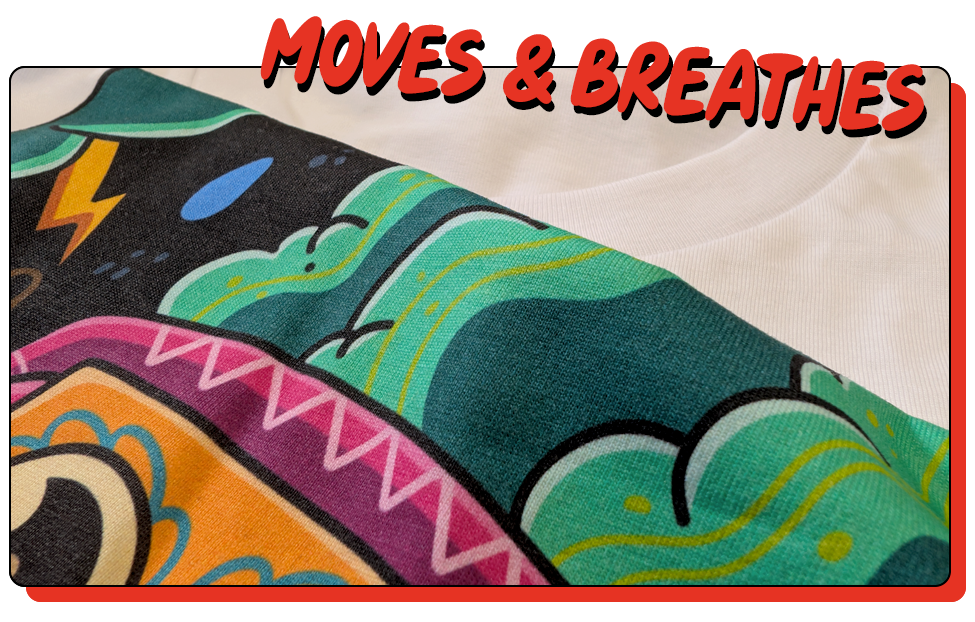
Before any colour goes down, we pre-treat the garment. This is arguably the most important part of the process, and it’s the reason a properly printed DTG t-shirt holds its colour wash after wash. The pre-treatment opens up the fibres so the ink can actually bond with them, rather than just sitting on the surface. This gives a soft finish when you run your hand over it. The print moves and breathes with the material rather than against it.
Kornit systems apply this pretreatment automatically, and the ink is laid directly on top using a 'wet-on-wet' method. This means there's no separate drying step between pretreatment and printing, which helps the ink bond more effectively and keeps production moving quickly.
The ink is a water-based formulation (Kornit's NeoPigment range) fired through up to six channels depending on your design. Kornit printers use the traditional CMYK channels, plus extra red, green and white channels. This widens the colour gamut so the printer can hit more accurate, vibrant spot colours without mixing them from just four base inks.
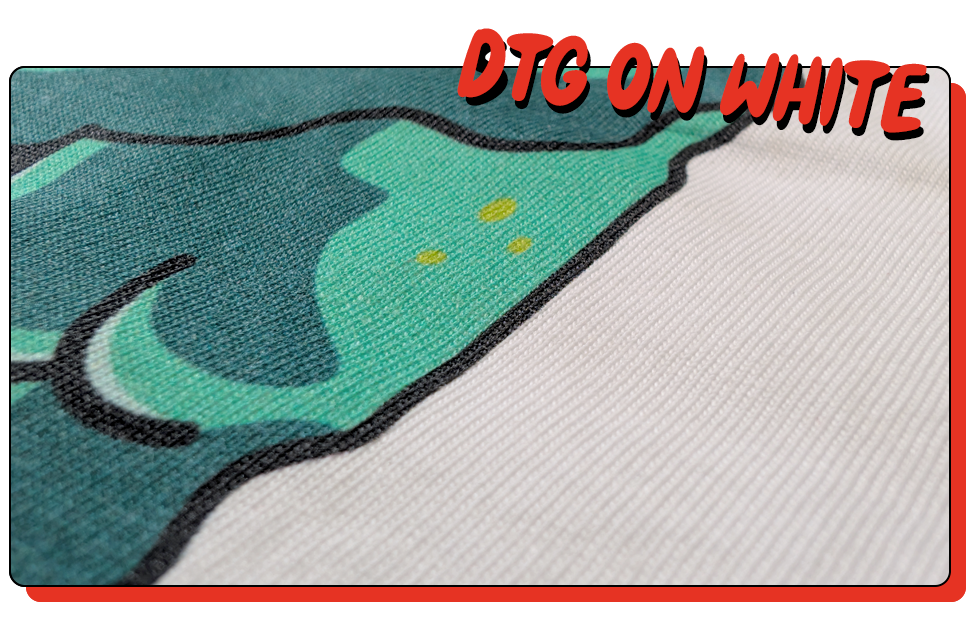
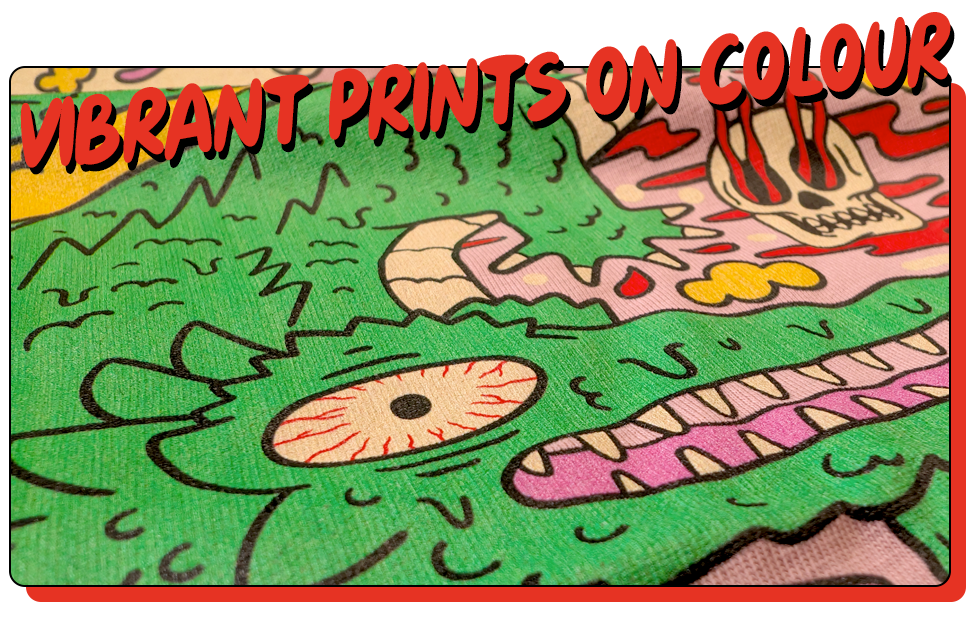
Designs printed on colour garments first have a white layer of ink laid down before the colour ink. This white layer is what makes printing on dark garments possible, since without it, colours would simply disappear into a black or navy t-shirt. White on white printing isn't possible with DTG so the white layer is skipped, which results in a much softer hand feel but colours can appear less vibrant.
Each garment being printed can vary in thickness, cotton composition, weave, and dye colour, and printing results can vary as a result. We calibrate print settings on a variant level, but even small differences in dyes between batches can affect the printed outcome. That being said, your customers likely won't notice small differences in colours because the results are always vibrant and high quality as long as our design file guidelines have been followed!
DTG Strengths
- Soft, breathable finish
Since ink lives inside the fibres rather than on top of them, DTG prints feel like part of the garment, not an addition to it. - Excellent with detail and gradients
Photographic prints, soft colour blends, and fine detail all reproduce well, because the inkjet process lays down colour with genuine precision. - No minimum order quantities
Every garment is printed individually, making it a natural fit for print-on-demand and one-off orders. - Best-in-class results on cotton
Natural fibres absorb ink cleanly and consistently, giving retail-quality output. - Eco-friendly production
Kornit's inks & fixation are water-based and vegan friendly, meaning they can be used to create eco-friendly, vegan-friendly products!
DTG Weaknesses
- Fibre-dependent
DTG needs natural fibre content to work properly. Push into polyester-heavy blends and the ink can't soak in the way it needs to and colours sit duller, the finish falling short of what cotton delivers. - Pretreatment required
In rare cases, the DTG pretreatment stage creates a fixation odour present when the garment arrives with your customer. In these cases one wash cycle will remove it. - Some batch variability
Differences in weave, dye lot, or cotton composition between garments can cause small print variations, even with calibrated settings. - Vibrancy can dip on dark synthetic blends
Without enough natural fibre to hold the white base ink properly, colours on darker poly-blend garments won't pop the way they do on cotton.
What is DTF Printing?
Direct to Film (DTF) printing takes an entirely different route to the same goal: rather than printing onto the garment at all, the design is printed onto a special PET film first, using the same CMYK-plus-white ink structure as standard DTG.
While that ink is still wet, a fine hot-melt adhesive powder is applied over the design and the excess is shaken off, leaving powder only where the ink is. The film then passes through a curing stage, where heat melts the powder into a smooth, glossy layer. This step turns a printed film into a transfer, ready to be applied to your product. Finally, the film is heat-pressed onto the garment: heat and pressure activate the adhesive, bonding the design to the fabric. Once it cools, the film is peeled away, leaving the print behind.
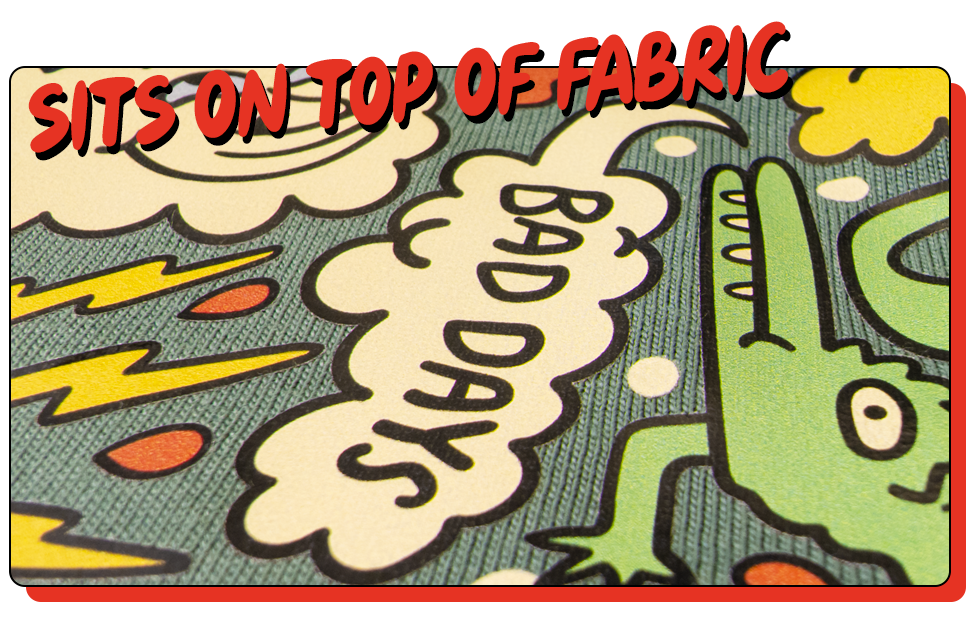
The bond that holds a DTF print in place is both mechanical and chemical. The adhesive powder grips into the ink pigment as it melts, then fuses to the garment surface under heat. Because the design sits on top of the fabric rather than depending on it to absorb ink, the fabric underneath becomes far less important to the outcome. Cotton, polyester, blends, even some of the trickier textured materials; DTF doesn't need any of them to behave a certain way to get a clean result.
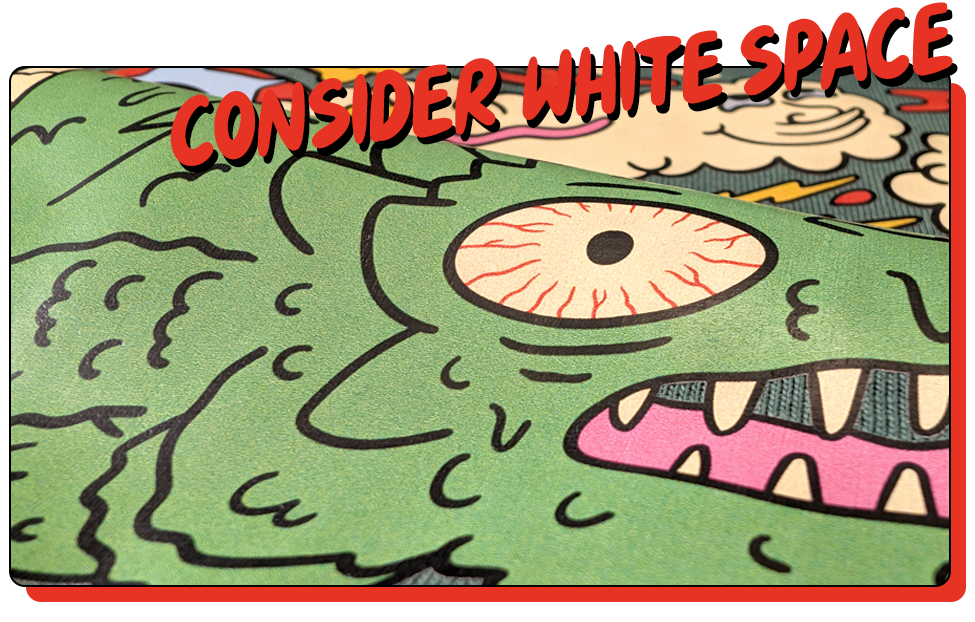
The nature of the DTF printing process means the print sits on top of the fibres of the garment, rather than within the fibres as with DTG. It means the result can feel more restrictive or less breathable than DTG, especially if your design is a large, solid block of colour. This can be counteracted by using smaller designs, or including white space within your design to allow the fabric between the printed areas to move and breathe.
DTF Strengths
- Works on almost any fabric
Because DTF doesn't rely on fibre absorption, polyester, blends, and performance fabrics that DTG can't handle are no problem at all. - Bold, punchy colour
The white base sits directly beneath the design rather than soaking into fibres, so colours tend to look bolder and more saturated, especially on dark garments. - Strong durability
The cured adhesive layer acts as a protective top coat, giving DTF prints an edge in resistance to wear, cracking, and repeated washing. - No garment pretreatment required.
The prep work happens on the film, not the fabric, so there is no fixation odour. - Consistent regardless of dye batch. Since the ink never has to interact with the garment's fibres, differences in fabric dye lots don't affect the printed result the way they can with DTG.
DTF Weaknesses
- A touch more texture
Because the design sits on the surface, there's a tactile presence you can feel. Modern films and powders have narrowed this gap a lot compared to older iron-on transfers, but it's still noticeable. - An extra production stage
Printing the film, applying powder, curing, then pressing is more steps than DTG's single-pass process so it can sometimes take longer for production before shipping. - Film waste
Inkthreadable prides itself on eco-friendly practices, but the PET film used to carry the transfer isn't biodegradable. This means it's unavoidable plastic waste which is a genuine environmental trade-off against DTG's more direct process.
The Key Differences
There's plenty to keep in mind when choosing your print method, though there are three big ones to consider when comparing DTG & DTF.
1. Eco-friendliness
Neither print method is eco-friendly in the strictest sense. They each use resources and generate waste, whether it's pollution from electricity generation or the PET film waste from DTF printing. That being said, DTG is the more eco-friendly solution. The non-toxic, water-based inks & fixation are far less harmful to the environment than other print methods, and there is no plastic waste at all. If plastic waste is a serious consideration for your brand it's advised you stick with DTG.
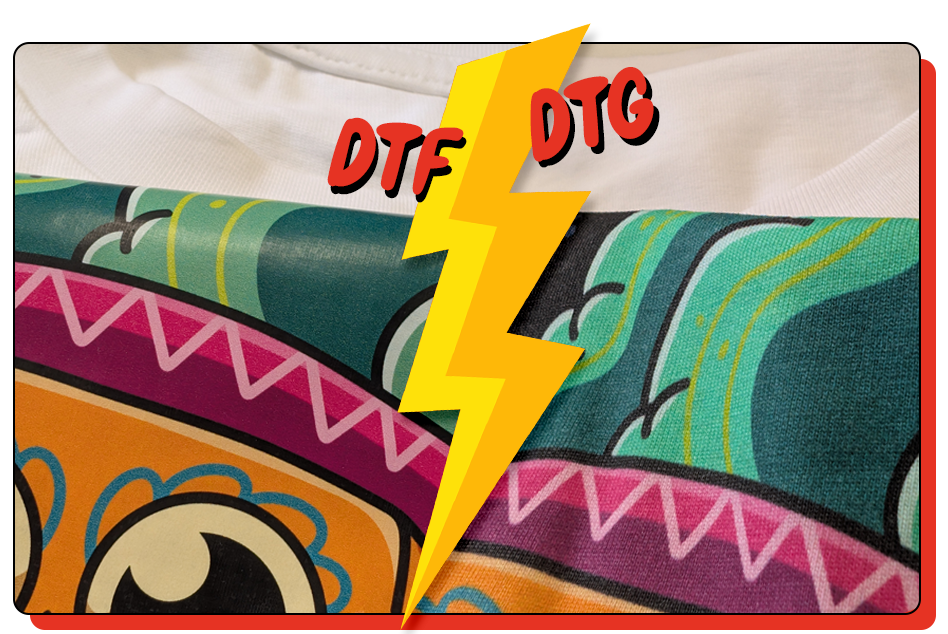
2. Hand-feel
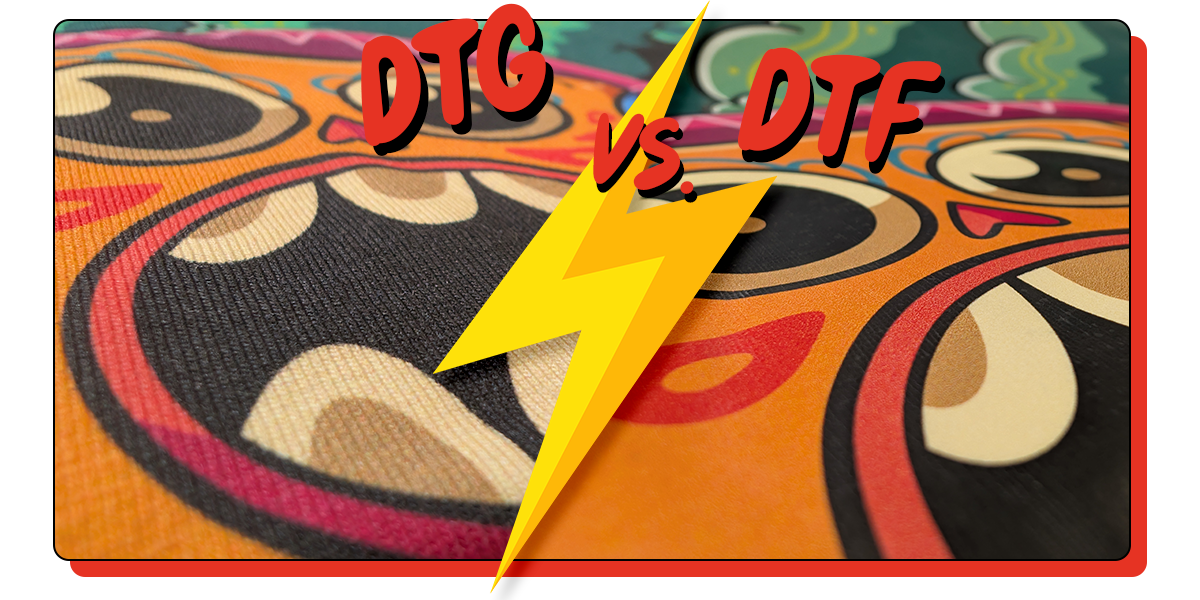
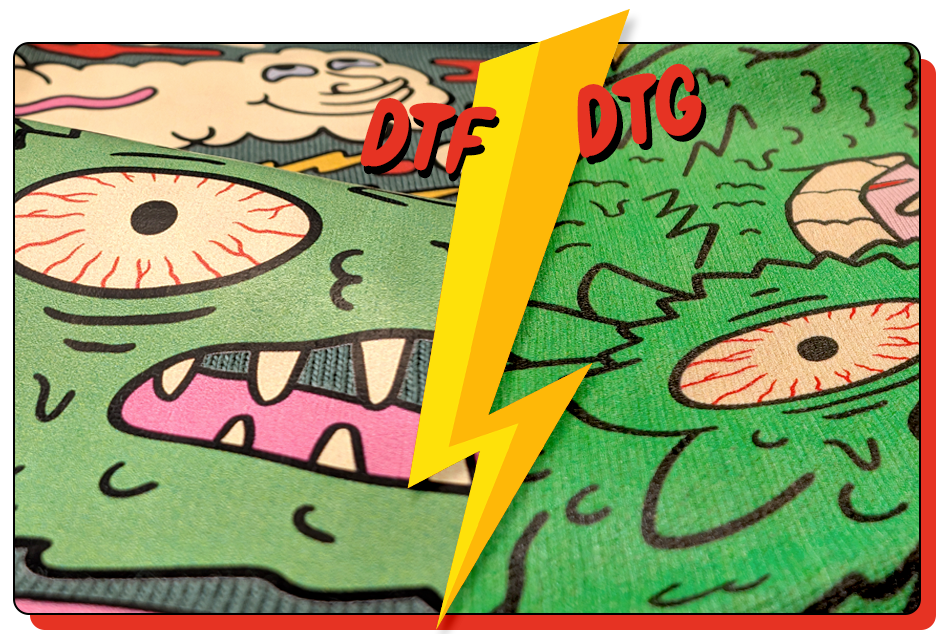
DTG sits within the fabric, so it feels soft and barely noticeable. DTF sits on top of the fabric, so there’s a texture you can feel, although the finishes we use today are a world away from the stiff, cracky transfers from a few years back.
This same method affects how the fabric moves and breathes. Large DTF prints can make the fabric feel more rigid, less flexible, and less breathable. It's not necessarily a bad thing, you can design around it easily. It's just one to keep in mind.
3. Colour vibrancy
DTF tends to produce punchier, bolder colours, especially on darker garments, because the white base layer sits underneath the design and lifts the colours above it. DTG holds its own on lighter fabrics but can lose a bit of vibrancy on darker ones, simply because there’s less white ink to work with once it’s soaked into the fibres. That being said, Kornit's CMYK+RGW colour channels create greens and reds that are more vibrant than the standard CMYK+W used for DTF. They're simply different methods with different results! If you're unsure which will work for your designs we'd advise ordering a sample of each to compare.
Some more thoughts to consider:
Fabric compatibility: DTG is brilliant on cotton but limited beyond that. DTF works on almost anything we put through it, which makes it the far more flexible option across a varied product range. If you're building an activewear brand for example, DTF is your go-to for polyester.
Durability: Both hold up well when cared for properly and washed as instructed. Inkthreadable offers a 12 month guarantee on all prints where the care instructions have been followed.
Best for: DTG suits detailed, photo-style designs and colour-to-colour grandients on cotton garments. DTF suits bold designs across a much wider range of fabrics and product types.
Neither one beats the other across the board. They’re simply different tools for different jobs.
Which One Should You Choose?
If you're printing on cotton t-shirts and want that soft, barely-there finish, DTG is very hard to beat, especially for detailed or photographic artwork. If your range leans into polyester sportswear, mixed-fabric hoodies, or you simply want one method that performs reliably across a wide product catalogue, DTF gives you that flexibility. Understanding what each one does well, and where it falls short, is what lets you match the right process to the right product.
The good news is you don’t have to pick a side and stick with it forever. We run both methods side by side for exactly this reason, choosing whichever one suits each individual product rather than squeezing every design through a single process.
Final Thoughts
DTG and DTF might sound similar, but they're two completely different tools in your kit. One soaks in, one sits on top. One loves cotton, the other couldn’t care less what you throw at it.
Understanding the difference means you can make smarter choices for your products, your customers, and your business.
MEET INKTHREADABLE
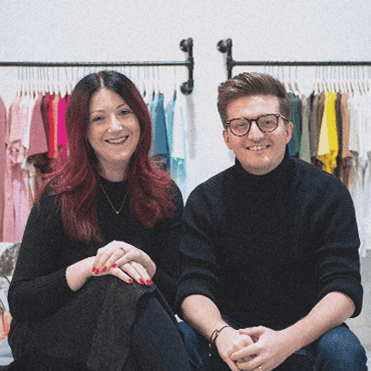
We're a family-run business, but we pack a lot of punch! Our team is made up of expert printers, graphic designers and the most friendly customer support team you'll ever meet (we are from Lancashire, after all). Founded in 2013 by co-founders Alex & Amy, Inkthreadable has been built from the ground up. We've already fulfilled over 2 million orders, and we're ready to fulfil yours too!